The world of sports moves at a lightning pace. You sit on your sofa with your phone in your hand. The final whistle blows. You immediately open a football player ratings app to see how your favorite superstar performed. Is it a 7.2 or a rare 9.5? These numbers define the debates you have with your friends at the local pub or on social media. They turn a chaotic 90 minutes of motion into a simple, objective score.
The task of understanding Football Player Ratings today is more complex than it was a decade ago. It is no longer about a journalist sitting in a press box with a notebook. It is about massive algorithms. It is about machine learning. It is about data points that track every single twitch on the grass. You want the truth behind the numbers. This guide will walk you through the latest football player stats and the systems that create them.
The Science of the Score: How Modern Ratings Work
First of all, you must understand that not all rating systems are the same. You might see a player with an 8.0 on one site and a 7.1 on another. This happens because the “secret sauce” behind the math is different for every platform.
The WhoScored Methodology
WhoScored is one of the most trusted names in the industry. They use an automated algorithm that digests more than 200 raw statistics. Every positive action adds points. Every negative action subtracts them. However, they do something special with spatial variables. A successful dribble in the final third of the pitch is worth significantly more than a dribble in the defensive half.
The system starts every player with a base score of 6.0. As the match progresses, the rating updates every 30 seconds. Additionally, the algorithm considers the context of the match. If a team secures a clean sheet or a victory, the players receive a boost. Roughly 10 minutes after the game, the player with the highest score receives a green star. This marks them as the man of the match.
The Sofascore Framework
Sofascore is another giant in the field. Their machine learning framework evaluates over 2,000 statistical iterations per match. Every player begins the match with a neutral baseline of 6.5. The algorithm is updated 60 times during the 90 minutes.
They group actions into five core categories:
- Shooting: The quality of shots and their chance to score.
- Passing: The creation of opportunities. Riskier progressive passes rate higher than safe backwards passes.
- Dribbling: How ball carries improve the attacking potential.
- Defending: How well the player stops the opposition.
- Goalkeeping: The effectiveness in preventing goals.
A perfect 10 is the holy grail. It is incredibly rare. Only one out of every 3,000 performances earns a 10. Plus, if your name is Lionel Messi, your odds are much better. He earns a perfect 10 in one out of every 12 matches.
The FotMob Approach
FotMob takes a different path. They focus on decoupling a player from the mistakes of their teammates. They use advanced metrics like Expected Goals (xG), Expected Goals on Target (xGOT), and Expected Assists (xA). Therefore, an individual rating does not suffer if a striker misses a perfect pass or a defender fails to cover a gap.
Today’s Latest Football Player Ratings: The European Elite
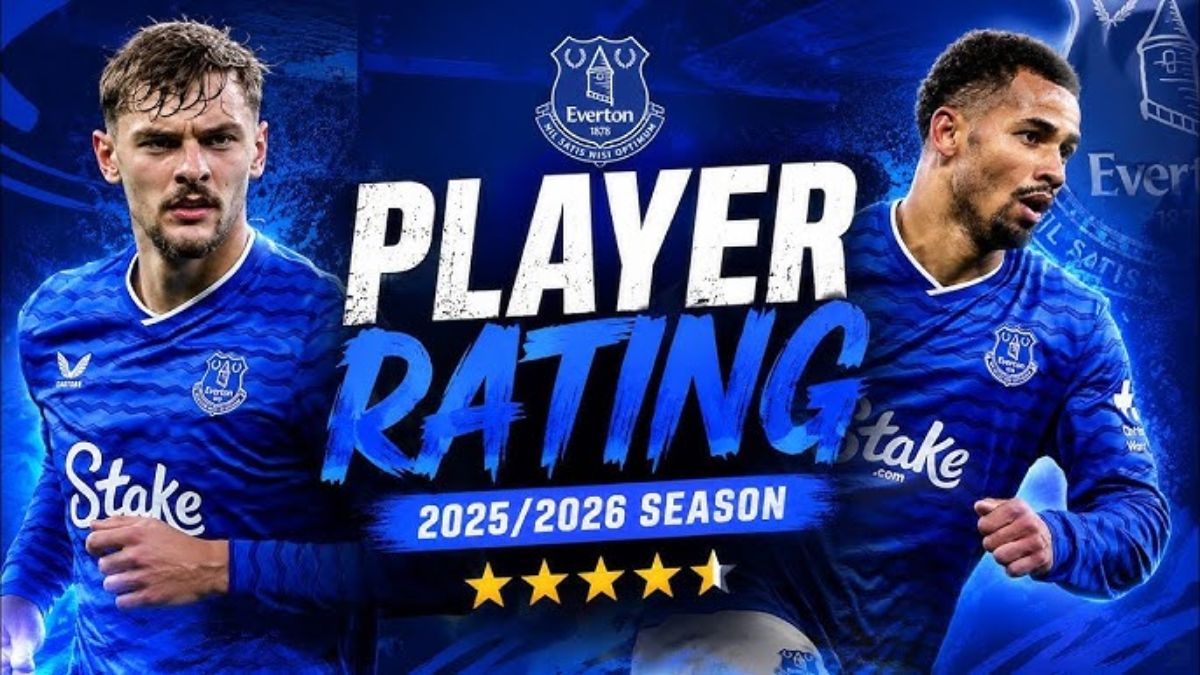
The 2025/2026 season has produced some of the most consistent numbers in history. You can find these football player ratings today across various platforms. The data shows a clear hierarchy of talent.
The Rise of Lamine Yamal
Lamine Yamal is the natural heir to the throne of greatness. At only 18 years old, he has dominated the Spanish La Liga. His average rating on WhoScored is a massive 8.23. He recorded 27 goal involvements in just 26 starts. On top of that, he passes the eye test with ease. He is the natural heir to Lionel Messi.
Harry Kane: The Scoring Machine
Harry Kane is a man on a mission at Bayern Munich. He has managed to put the “trophy monkey” off his back. His statistical profile is nearly perfect. In the Bundesliga, he scored 36 goals in 31 appearances. He averaged 1.36 goals per 90 minutes. This earned him an 8.14 rating on FotMob and a 7.92 on Sofascore. Finally, he is the primary reason England fans feel optimistic about the upcoming World Cup.
Michael Olise: The Creative Engine
There is perhaps no team in the world that would not benefit from Michael Olise. He is only 24 years old, yet his productivity is frightening. He registered 15 goals and 19 assists in just 23 league matches. He created 27 big chances for his teammates. His FotMob rating sits at a high 8.09.
Premier League Statistical Leaders
The English Premier League is the most-watched league in the world. You check the football player rankings there more than anywhere else. The 2025/2026 season was a battle between direct output and creative volume.
Erling Haaland vs. Bruno Fernandes
Erling Haaland is often likened to a robot. He is a serial goal-getter. He registered 27 goals in 34 starts for Manchester City. However, he also missed a league-high 30 big chances. This shows the high volume of service he receives. His FotMob rating was 7.68.
On the contrary, Bruno Fernandes is the creative heartbeat of Manchester United. He recorded 9 goals and 21 assists. He created a league-leading 136 total chances and 33 big chances. Therefore, his platform ratings were often higher than Haaland’s. He earned an 8.03 on FotMob and a 7.54 on Sofascore.
The Defensive Anchors
You often find that defensive players get lower ratings because the algorithms favor attacking play. Clearances and tackles simply do not move the needle as much as shots on target. However, some players still break through. Declan Rice at Arsenal earned a 7.56 rating on FotMob. Federico Dimarco at Inter Milan was even higher with a 7.53. He recorded 6 goals and 17 assists from a defensive position.
Football Player Stats Comparison: The Virtual vs. The Real
You might play video games and wonder why the ratings there are so different. Platforms like EA Sports FC 26 and Madden NFL 26 use different logic. They often rely on legacy reputations and physical attributes.
The Reputational Buffer
In EA Sports FC 26, the peak of the ratings pyramid is heavily insulated. Mohamed Salah received a joint-top rating of 91 despite a challenging season with Liverpool. This is a reputational buffer. It rewards him for his central role in past titles. On top of that, Erling Haaland saw a drop from 91 to 90. Even though he scored 27 goals, a minor dip in his pace and dribbling stats triggered a downgrade.
Madden NFL 26 and the 99 Club
American football has its own set of rules for ratings. Josh Allen and Lamar Jackson both earned the coveted 99 rating in Madden NFL 26. This reflects their rushing ability and dual-threat status. Matthew Stafford, despite winning the NFL MVP and having a historic passing season, was rated only an 88. He was placed fifth in the quarterback rankings. This is a major divergence from real-world analytical grading.
The PFF Revolution: Grading American Football
Pro Football Focus (PFF) changed the way you look at the gridiron. They do not just count yards. They grade every player on every single play.
The -2.0 to +2.0 Scale
The backbone of PFF is a qualitative scale. It uses half-point increments.
- 0.0 (The Baseline): The player does exactly what is expected. A quarterback completing a routine 3-yard slant receives this grade.
- +2.0 (Elite Execution): Reserved for exceptional plays. Imagine a 30-yard pass into tight double-coverage with pinpoint accuracy.
- -2.0 (Critical Error): Applied to highly detrimental actions like an unforced turnover.
These raw scores are then converted to a final 0 to 100 scale. A season grade of 80.0 or higher represents elite, consistent performance.
Real-World Realities in 2025
Matthew Stafford was the king of the 2025 season. He led the league with a 91.9 PFF overall grade. He threw 52 touchdowns and over 5,600 yards. He also managed 58 “big-time throws.” This is the third-most ever recorded by PFF.
The wide receiver position saw a historic campaign from Puka Nacua. He earned a 96.1 grade from PFF. He caught 153 passes for 2,047 yards. Gradually, he has become the gold standard for his position.
Tactical Environments: The Performance Suppressors
A player is only as good as the system around them. You have seen great players look mediocre in the wrong team. The 2025/2026 season provided several examples of this.
The Antony Revival
Antony had a miserable time at Manchester United. He underperformed his €95 million price tag. He was eventually relegated to the “bomb squad” training after 5pm. However, he moved to Real Betis in January 2025. Under manager Manuel Pellegrini, he was placed in a possession-oriented system. This maximized his skills. His Sofascore rating in European competition rose to 7.66. He revived his career through a better tactical fit.
The Case of Omar Marmoush
On the contrary, Omar Marmoush at Manchester City shows how a lack of minutes can suppress stats. City signed him for £59 million to provide depth behind Erling Haaland. He struggled to find time in Pep Guardiola’s structured system. He totaled only 699 minutes in the Premier League. Despite this, his efficiency was exceptional. He finished with an overall Sofascore rating of 8.00. Therefore, many clubs like Tottenham and Barcelona are now monitoring him.
Risk Management and Contract Attrition
Teams do not just look at football player ratings after match; they look at long-term health and financial risk.
The Micah Parsons Blockbuster
The Green Bay Packers made a massive trade for Micah Parsons. They gave up two first-round picks and Kenny Clark. They signed him to a $186 million extension. At first, the impact was huge. With Parsons, the defense allowed only 20.1 points per game. They were the No. 2 seed in the NFC.
However, disaster struck. Parsons suffered a torn ACL in Week 15. The defense collapsed immediately. They allowed 27.5 points per game without him. The team lost their final four games and fell to the No. 7 seed. This illustrates the high volatility of elite assets.
The Jaire Alexander Arbitrage
The Philadelphia Eagles experienced a unique situation with Jaire Alexander. They acquired him from the Ravens for a sixth-round pick. Just eleven days later, Alexander retired due to chronic knee issues. He never played a single snap for the Eagles.
At that time, it looked like a total loss. But the Eagles used the salary-cap rules to their advantage. Alexander had to pay back his signing bonus. The Eagles recovered nearly all the cash and cap space. They effectively traded back one round in the draft and lost nothing else. This is the hidden side of player valuation.
The Future: 2026 NFL Draft Prospecting
You are likely already looking toward the future. The 2026 NFL Draft Prospect Guide is already a hot topic. Scout Brett Whitefield has developed a composite scoring system. It buckets players into four categories: film/traits, production, athleticism, and intangibles.
The scale runs from 0 to 100. If a player scores between 95 and 100, they are “Blue Chip Talent”. Those between 87.5 and 94.9 receive a “Day 1 Grade”. This system watches almost every single snap of a player’s college career using All-22 film. It removes the “scout speak” and gives you a clear picture of who will succeed at the next level.
football player ratings website Newswg and Beyond
To stay updated, you need a reliable source. You can check the football player ratings website Newswg for the latest updates across all leagues. Whether you are looking for the football player stats comparison of the week or today’s top-rated youngsters, these resources are vital.
Additionally, the football player ratings app on your phone is likely powered by the data we discussed. Platforms like Sofascore and FotMob provide the backbone for your sports knowledge. You now know that a 7.5 is not just a random number. It is the result of thousands of data points and complex machine learning.
FAQ’s
What is the most common player rating in soccer?
The most common rating across millions of calculated performances is a 6.8.
How long does it take to generate the first rating in a match?
Most platforms, including Sofascore, require 10 minutes of play to generate the first set of ratings.
Why do defenders usually have lower ratings than forwards?
Rating algorithms have a universal bias toward offensive production. Actions like shots on target drive scores up much faster than defensive actions like clearances or interceptions.
What is the half-saturation point in player grading?
This is a point used by PFF to ensure small sample sizes do not ruin a player’s ranking. It requires a minimum number of shots or passes before a player can be ranked at the top or bottom of a category.
Can a player have a season rating higher than their best single game?
Yes. In the PFF system, playing well for an extended period is harder than a short burst. Consistency over a full season is rewarded with a higher overall grade than a single high-scoring game.
Concluding Words
The world of Football Player Ratings is a blend of intense data and human drama. You see the 8.23 of Lamine Yamal and the 91.9 of Matthew Stafford, but now you know the labor that goes into those numbers.
Whether it is the 30-second updates from WhoScored or the qualitative play-by-play grading of PFF, these systems provide a window into the “beautiful game” that traditional stats cannot match. They help you understand why some players are undervalued and why others are worth $186 million. Keep your football player ratings app close. The numbers are always changing.